The Ecosystem of the Twenty Mile Creek Valley
The Twenty Mile Creek Valley is a vital ecological corridor in Southern Ontario, connecting the Niagara Escarpment with the shores of Lake Ontario. This area is noted for its high biodiversity, acting as a sanctuary for numerous species within the rare Carolinian forest zone. More information about the regional environment is available on Wikipedia.
Historically, the landscape has evolved from jack pine forests to a complex mixed hardwood system. By the 19th century, when European settlers arrived, the area featured significant stands of white pine, oak, and black walnut. Research indicates that before colonial settlement, Indigenous peoples utilized managed burning to maintain the health of oak savannas in the region.
Provincial Ecological Recognition (ANSI)
Due to its unique biological features, the Twenty Valley’s Carolinian forest is designated as a Provincial Life Science ANSI (Area of Natural and Scientific Interest). This status highlights the area as one of Canada’s most diverse temperate ecosystems. Today, the management of this sensitive environment is overseen by the Niagara Peninsula Conservation Authority (NPCA). Official conservation details can be found on the NPCA Conservation page.
Geology of the Gorge and Waterfalls
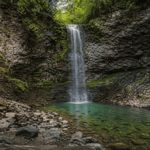
The geography of the area is defined by a deep gorge system carved by post-glacial meltwater. The site features two primary cataracts:
- The Upper Falls: A 27-meter drop over the Niagara Escarpment.
- The Lower Falls: An 11-meter cascade exposing ancient rock strata.
The Twenty Mile Creek gorge is the second most significant escarpment cut in the Niagara Peninsula, surpassed only by the Niagara Gorge itself. The exposed rock layers date back over 400 million years to the Silurian period.
Biodiversity and Flora
The region supports a vast array of vascular plants, with over 470 species documented in the vicinity. As part of the Carolinian deciduous forest zone, the canopy includes a mixture of hardwood and coniferous trees:
- Deciduous Species: White Oak, Sugar Maple, Black Walnut, Shagbark Hickory, and the rare Tulip Tree.
- Coniferous Species: Eastern White Pine and Eastern Red Cedar, often found on limestone outcrops.
- Understory Flora: Wild Ginger, Trilliums (Ontario’s provincial flower), Wild Geranium, and Virginia Bluebells.
Wildlife and Aquatic Life
Twenty Mile Creek serves as a significant warm-water fishery. The watershed provides habitat for various fish species, including Largemouth Bass, Yellow Perch, and Northern Pike. The surrounding forests and wetlands also support a diverse range of terrestrial wildlife:
- Birds: The area is a stopover for migratory songbirds, including various warblers, Indigo Buntings, and Eastern Bluebirds.
- Mammals: White-tailed Deer, Red Fox, and several species of bats are common in the valley.
- Reptiles & Amphibians: The wetlands are home to various native turtles and frogs, which serve as indicators of the ecosystem’s health.
The Cataract Trail: A Geographic Overview
The Cataract Trail is a public path that follows the historical route of Twenty Mile Creek. It allows for the observation of both the upper and lower waterfalls and provides a view of the transition from the natural forest to the historical structures of the 19th-century Glen Elgin settlement.
The trail connects with larger networks, including the Bruce Trail. Visitors planning to hike in the area should consult the NPCA for current trail conditions, safety warnings, and seasonal closures. Please note that this website does not provide trail maintenance or emergency services.
This article is for informational purposes only. To support conservation efforts or to report environmental concerns in the park, please contact the NPCA directly.
Related posts:
 Ball’s Falls, Ontario: Geographic & Historical Guide
  Can hikers swim in Twenty Mile Creek? NPCA NaturePlus Pass: Admission & Membership Guide for Ball’s Falls Are there rare or endangered species in the area? Accessibility at Ball’s Falls: ASL Interpreters & Inclusive Tours Geography & Geology of Ball’s Falls: Niagara Escarpment Strata Ball’s Falls, Ontario: History, Waterfalls & Geography Guide Is Ball’s Falls on the Niagara Escarpment? | Geological Guide Ball’s Falls Thanksgiving Festival History of Ball’s Falls: From Loyalist Settlement to Glen Elgin Ghost Town